
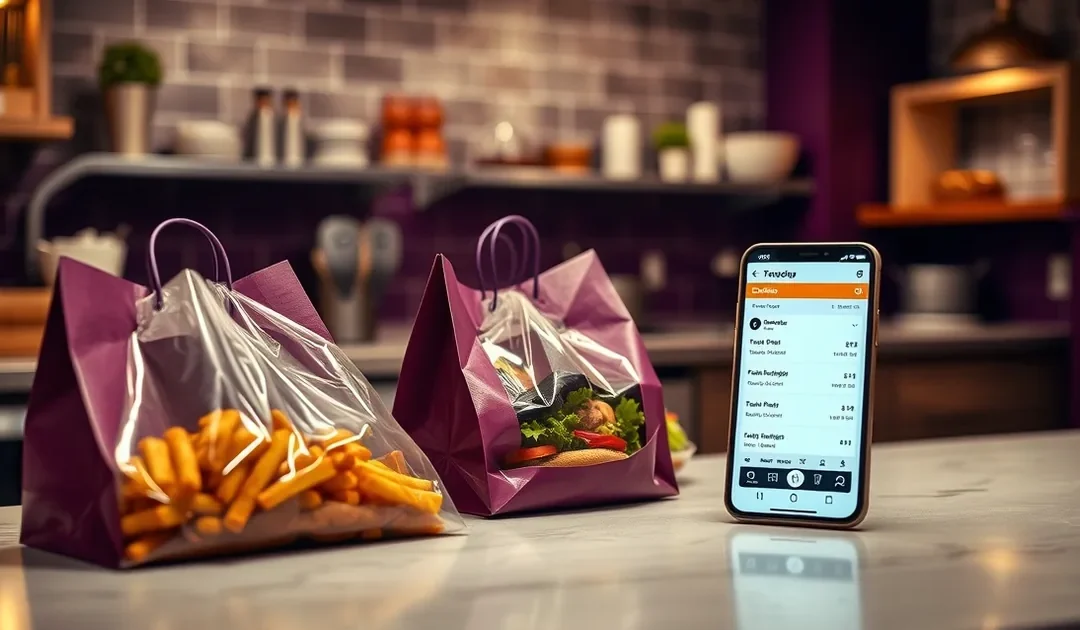
Foodpanda brings a restaurant new customers and handles delivery, while your own ordering website and WhatsApp let you keep those customers, so most restaurants do best using the app for discovery and their own channels for repeat orders. The question is not whether to leave the app. It is how to stop every repeat order from going back through it.
This article compares the two from a restaurant owner’s side: what the app gives, what you give up, what direct ordering needs, and how to make your own website the place regular customers order from.
What Does Foodpanda Give a Restaurant?
Foodpanda gives a restaurant access to people already browsing for food in the app, a ready ordering system, online payments and, in many areas, its own delivery riders.
A delivery app is a marketplace. Customers open it already hungry and already ready to order, and your restaurant appears alongside others nearby. For a new restaurant, or one in an area where people rely on the app, that discovery is valuable. The app also handles the ordering screen, payments and, in many cities, the delivery itself.
Those are real benefits, and most restaurants in Pakistan’s larger cities keep a presence on at least one delivery app for that reason.
What Do You Give Up by Taking Every Order Through the App?
On the app, the customer relationship, the customer data and the presentation of your restaurant belong to the platform, and your listing sits beside competitors on every visit.
- The customer relationship. The customer thinks of the order as an app order. When they are hungry again, they open the app, not your number.
- Customer data. You usually do not get the contact details you would need to tell regulars about a new dish or a Ramadan menu.
- Your brand beside competitors. Every visit to the app shows your customer other restaurants, offers and rankings you do not control.
- Rules you do not set. Listing order, promotions and how reviews are shown are decided by the platform.
Want Regular Customers Ordering From You Directly?
ORM builds restaurant websites and Google profiles that turn searches and repeat customers into direct orders.
What Does Your Own Ordering Website Give You?
Your own website and WhatsApp ordering give you the customer’s details, a direct line for repeat orders, your full menu in your own presentation, and a page that Google can show when people search for your restaurant.
When a customer orders from your website or on WhatsApp, the relationship stays with you. You know who orders often, what they order and when. You can message them about a new item, an Eid menu or catering, and they can reach you without passing through a list of competitors.
Your website also works in search. People search for a restaurant by name, by dish and by area. A website with a readable menu and clear ordering options can appear for those searches and send the customer straight to you.
What Does Direct Ordering Need to Work?
Direct ordering needs a way to deliver, a way to take the order and payment, a menu that stays up to date, and someone who answers quickly during busy hours.
- Delivery. Your own riders, a local delivery service, or takeaway and pickup for nearby customers.
- Taking the order. An ordering page on your website, WhatsApp with quick replies, or both.
- Payment. Cash on delivery, plus a card or wallet option if you can offer one.
- An up-to-date menu. The same items and availability on your website, your Google profile and in WhatsApp replies.
- Fast replies. A direct order that waits twenty minutes for a reply is a customer who goes back to the app.
How Do Foodpanda and Your Own Website Compare?
The app wins on discovery and ready-made delivery, while your own website wins on customer relationship, repeat orders and how your restaurant is presented.
| Point | Delivery app | Your own website and WhatsApp |
|---|---|---|
| Reaching new customers | Strong: people browse the app | Grows through Google search, Maps and word of mouth |
| Repeat orders | Go back through the app | Come straight to you |
| Customer details | Usually held by the platform | Yours |
| Delivery | Riders provided in many areas | Your own riders, a local service or pickup |
| Presentation | Inside the app’s design, beside competitors | Your own brand, menu and photos |
| Rules and listing order | Set by the platform | Set by you |
How Can You Run Both Without Losing Regulars?
Use the app to find new customers, then, where your agreement with the app allows it, invite them to order directly next time with a card in the bag, a WhatsApp number and a reason to return.
Most restaurants do not need to choose. The practical approach is to treat the app as the way new customers find you, and your own channels as the way they stay. Read your agreement with the delivery app first, because platforms can restrict how you market to customers who ordered through them:
- Put a small card in every delivery bag with your WhatsApp number and a QR code to your menu page.
- Give regulars a reason to order direct, such as a dish or combo that is only on your own menu.
- Answer WhatsApp orders quickly, with saved replies for the menu, timings and delivery areas.
- Keep your menu and opening hours identical everywhere, so no customer meets a missing dish or a closed kitchen.
The same logic applies beyond food. Our comparison of SEO and Facebook ads explains why channels you own keep working after a campaign ends.
How Do Customers Find Your Own Restaurant Website?
Customers find your own website through Google: a complete Google Business Profile with your menu and ordering link, a menu page Google can read, and real reviews and photos.
- Google Business Profile. Verify the profile, add photos, hours and your menu, and link your website. Where Google’s food ordering options are available, check which ordering links appear and add your own. Our guide to Google Business Profile video verification covers the first step.
- A readable menu. Publish the menu as text on a web page, not only as a PDF or a photo, so Google can read the dishes and show your page for dish searches.
- Reviews and photos. Ask happy customers for Google reviews, and keep real photos of the food and the place up to date.
- A fast mobile page. Most food searches happen on phones, often at the moment someone is hungry.
Two restaurant case studies in our portfolio show how this works in search. Bella Pizzahh, a local pizzeria, covered its subject thoroughly and reached 732K search impressions in 12 months. Pronto Pizza more than doubled its click-through rate, from 0.39% to 0.9%, on 259K impressions.
Last Thoughts on Foodpanda vs Your Own Restaurant Website
Foodpanda and your own website do different jobs. The app is a strong way for new customers to discover your restaurant, and its delivery network removes a lot of work. Your own website and WhatsApp keep the customer relationship, the customer details and the repeat orders with you. Use the app to be found, invite every new customer to order directly next time, and make your website and Google profile easy to find and easy to order from.
Key Takeaways
- Delivery apps are strong for discovery and delivery.
- Orders through the app keep the customer relationship with the platform.
- Your own website and WhatsApp keep customer details and repeat orders with you.
- Direct ordering needs delivery, fast replies and a menu kept up to date everywhere.
- A complete Google Business Profile and a readable menu page bring direct customers.
Frequently Asked Questions (FAQs)
Should my restaurant leave Foodpanda?
Not necessarily. Many restaurants keep the app for new customers and move regulars to direct ordering through their website and WhatsApp.
Can I sell on Foodpanda and my own website?
Yes. Most restaurants that order direct still use an app for discovery. Keep your menu and hours the same on both.
Will customers order directly if they already use the app?
Many will, if you make it easy: a WhatsApp number, a quick reply and a reason to order direct, such as a dish only on your own menu.
Do customers order from restaurant websites?
Yes, especially regulars and people who search for the restaurant by name on Google. A clear menu and an easy ordering option matter most.
Should my website show the full menu?
Yes, as text on a web page rather than only a PDF or photo, so customers can read it on a phone and Google can understand it.
Is WhatsApp ordering enough?
For many restaurants it is a strong start. Pair it with a menu page on your website and quick replies, and keep someone answering during busy hours.
How do I add a menu to my Google Business Profile?
Edit your profile, add the menu items or a link to your menu page, and keep photos of popular dishes up to date.
How do I handle delivery without the app?
Use your own riders, a local delivery service, or offer pickup for nearby customers. Start with the areas closest to your kitchen.
Do Google reviews help restaurants get direct orders?
Yes. Reviews and photos influence which restaurant people choose in Google Maps, and that choice leads to your own page and phone number.
What are the alternatives to Foodpanda in Pakistan?
Other delivery apps operate in some cities, and many restaurants take orders directly through WhatsApp and their own websites.
Does ORM build restaurant websites?
Yes. ORM builds restaurant websites and optimises Google profiles so searches and regular customers turn into direct orders.
Free Audit Call
Want More Orders Coming Straight to You?
Book a free 20 to 30 minute call on Zoom, Google Meet or WhatsApp. We look at your site, your Search Console and the businesses ranking above you, then tell you what would move first.
Prefer to talk now? Call +92 300 6456323. Quotes are shared on WhatsApp once we have seen your numbers.
Nizam Ud Deen, author of The Local SEO Cosmos, is a seasoned SEO Observer and digital marketing consultant with close to a decade of experience. Based in Multan, Pakistan, he is the founder and SEO Lead Consultant at ORM Digital Solutions, an exclusive consultancy specializing in advanced SEO and digital strategies.
In The Local SEO Cosmos, Nizam Ud Deen blends his expertise with actionable insights, offering a comprehensive guide for businesses to thrive in local search rankings. With a passion for empowering others, he also trains aspiring professionals through initiatives like the National Freelance Training Program (NFTP) and shares free educational content via his blog and YouTube channel. His mission is to help businesses grow while giving back to the community through his knowledge and experience.